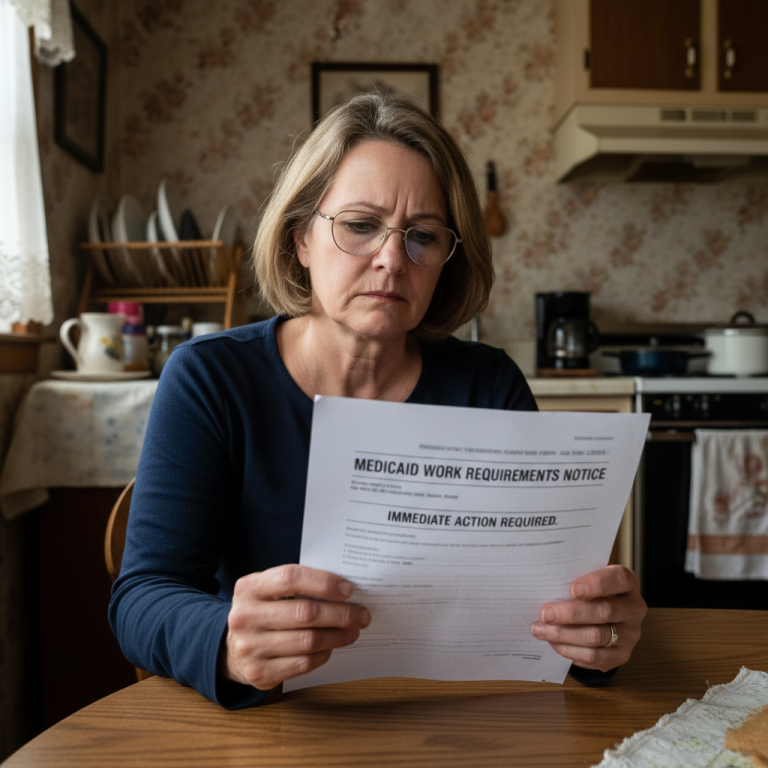
Who Is Exempt from Medicaid Work Requirements? The Full List of Protected Groups
Full list of who is exempt from Medicaid work requirements in 2026. See all protected groups, required documentation, and how to claim your exemption before deadlines hit.
Anúncios
Before you spend hours documenting work activities or worrying about losing Medicaid, check this first: you may not need to meet the new requirements at all. Federal law protects a significant number of enrollees — and many people don’t realize they qualify for an exemption.
The Full Federal Exemption List
Under the One Big Beautiful Bill Act, the following groups are completely exempt from Medicaid work requirements — no reporting, no documentation of work hours required:
- Pregnant individuals — from conception through a postpartum period defined by your state
- Foster care youth under age 26 — anyone who aged out of the foster care system
- People with documented disabilities — SSI recipients are automatically exempt; others need medical documentation of inability to work
- American Indians and Alaska Natives — all enrolled tribal members are federally exempt
- People in active substance use disorder treatment — must be enrolled in a licensed treatment program
- Primary caretakers of children under age 14 — covers parents and legal guardians who are the main caregiver
- Veterans with service-connected disabilities — must have a VA-documented disability rating
- Adults aged 65 and older — automatically exempt regardless of other circumstances
- Dual Medicare/Medicaid enrollees — people enrolled in both programs simultaneously
- Recently or currently incarcerated individuals — within a transition period defined by HHS guidance
“The truth is: a significant portion of the Medicaid population qualifies for at least one of these exemptions. Don’t assume you need to comply before you’ve verified your status.”
How to Claim Your Exemption
Exemptions are not always applied automatically — you may need to proactively document and report your exempt status to your state Medicaid agency.
| Exemption | How to Claim It | Proof Required |
|---|---|---|
| Disability | Submit medical records to Medicaid agency | Physician letter, SSI award letter, or functional assessment |
| Caretaker of child under 14 | Notify state Medicaid office | Child’s birth certificate, custody documentation |
| Pregnancy | Often auto-applied when pregnancy is in Medicaid records | Confirm with provider that pregnancy is documented in your file |
| SUD treatment | Submit enrollment letter from treatment facility | Current enrollment in licensed program |
| Tribal member | Submit tribal enrollment documentation | Tribal ID or certificate of enrollment |
Gray Areas: When Exemption Isn’t Clear-Cut
Some situations fall between exempt and non-exempt. These are the cases most likely to lead to wrongful terminations:
- Chronic illness without a disability determination: Having diabetes, heart disease, or fibromyalgia doesn’t automatically qualify you. You need a physician to document that your condition prevents you from working 80 hours/month.
- Informal caregiving: Caring for an elderly parent or sick spouse does NOT qualify for the child caretaker exemption. Only primary caretakers of children under 14 are federally protected.
- Part-time disability: If you can work some but not 80 hours/month due to a health condition, you’ll need strong medical documentation — state agencies may push back.
“In practice: if you’re in a gray area, get a letter from your doctor now. Waiting until after you receive a termination notice puts you in a much weaker position.”
Frequently Asked Questions
Do I have to re-prove my exemption every year?
Most exemptions require annual or semi-annual renewal as part of your standard Medicaid redetermination. Permanent disabilities may require less frequent re-verification once accepted.
What if my state rejects my exemption claim?
You have the right to appeal and request a fair hearing. File your appeal within the timeframe stated on your denial letter — usually 30–90 days. Coverage typically continues during the appeal.
Can both parents in a household claim the caretaker exemption?
Generally, no. Most states recognize only the primary caretaker for the exemption. In two-parent households, one parent may still need to meet work requirements.
I’m 63 and have a chronic condition — am I exempt?
You need either documentation that your chronic condition prevents you from working 80 hours/month, or you need to reach age 65. At 63, age alone isn’t sufficient — medical documentation is needed.
Is there a deadline to submit exemption documentation?
Submit documentation at least 1 month before your next enrollment renewal date. Earlier is always better.
Talvez voce goste deste conteudo:
Adults 50–64 on Medicaid: Why You’re at the Highest Risk Under the New Work Rules